
X VITAMIN
Resavska 19, Belgrade
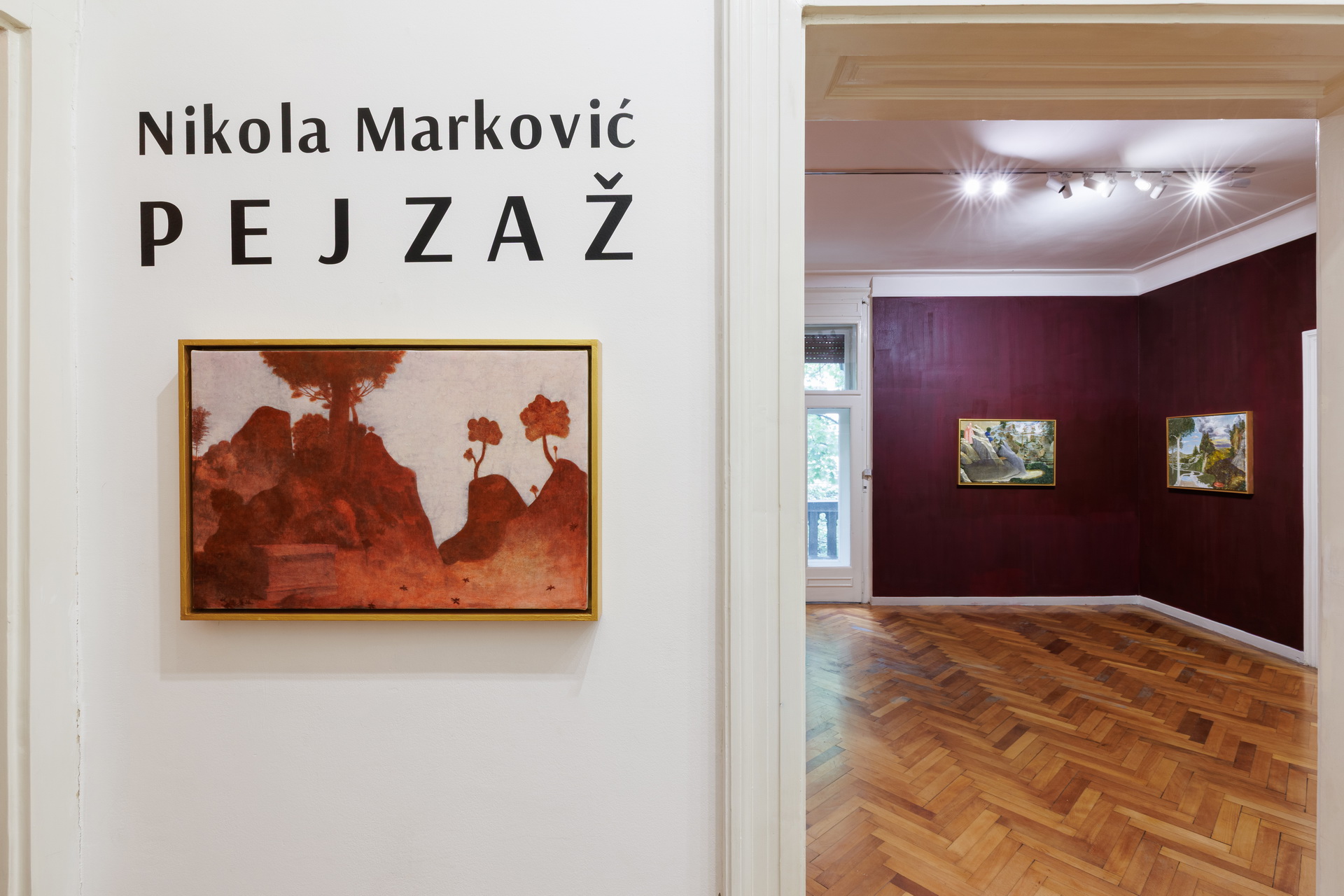
Nikola Marković
Landscape
21.05 – 05.06.2926
Landscape as a subject in painting began to develop more intensively during the late Gothic and early Renaissance periods, when nature gradually ceased to function merely as a decorative background for religious scenes and became an important carrier of atmosphere, symbolism, and spatial meaning. In late Gothic painting, landscape was often stylized and imaginative, imbued with theological meanings and the symbolism of divine order, while the early Renaissance brought a greater interest in perspective, light, and the observation of nature through the experience of the real world. Under the influence of humanism and the development of scientific thought, artists began to explore the relationship between man and space, introducing more realistic depictions of cities, vegetation, skies, and architecture, through which landscape became a site of reflection, contemplation, and a new understanding of the world.
At the same time, throughout the history of art, landscape has also functioned as a symbolic environment — not merely as a depiction of nature, but as a space of psychological, spiritual, and social surroundings. It becomes the context within which human experience is formed: a place of silence, unrest, memory, projection, or inner states. Landscape is therefore not a neutral background, but an active bearer of meaning that speaks about humanity’s relationship to the surrounding world, as well as to its own perception of reality.
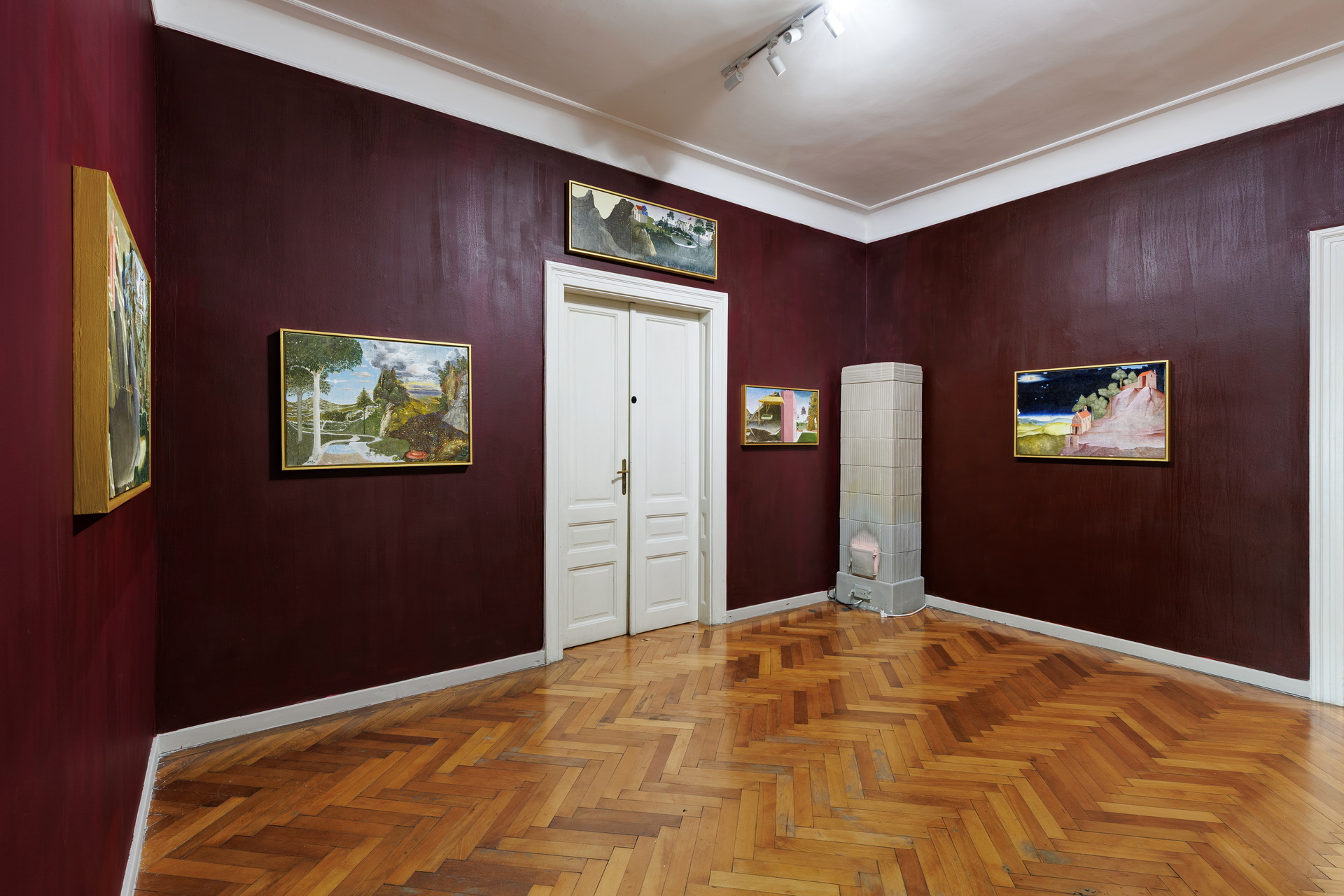
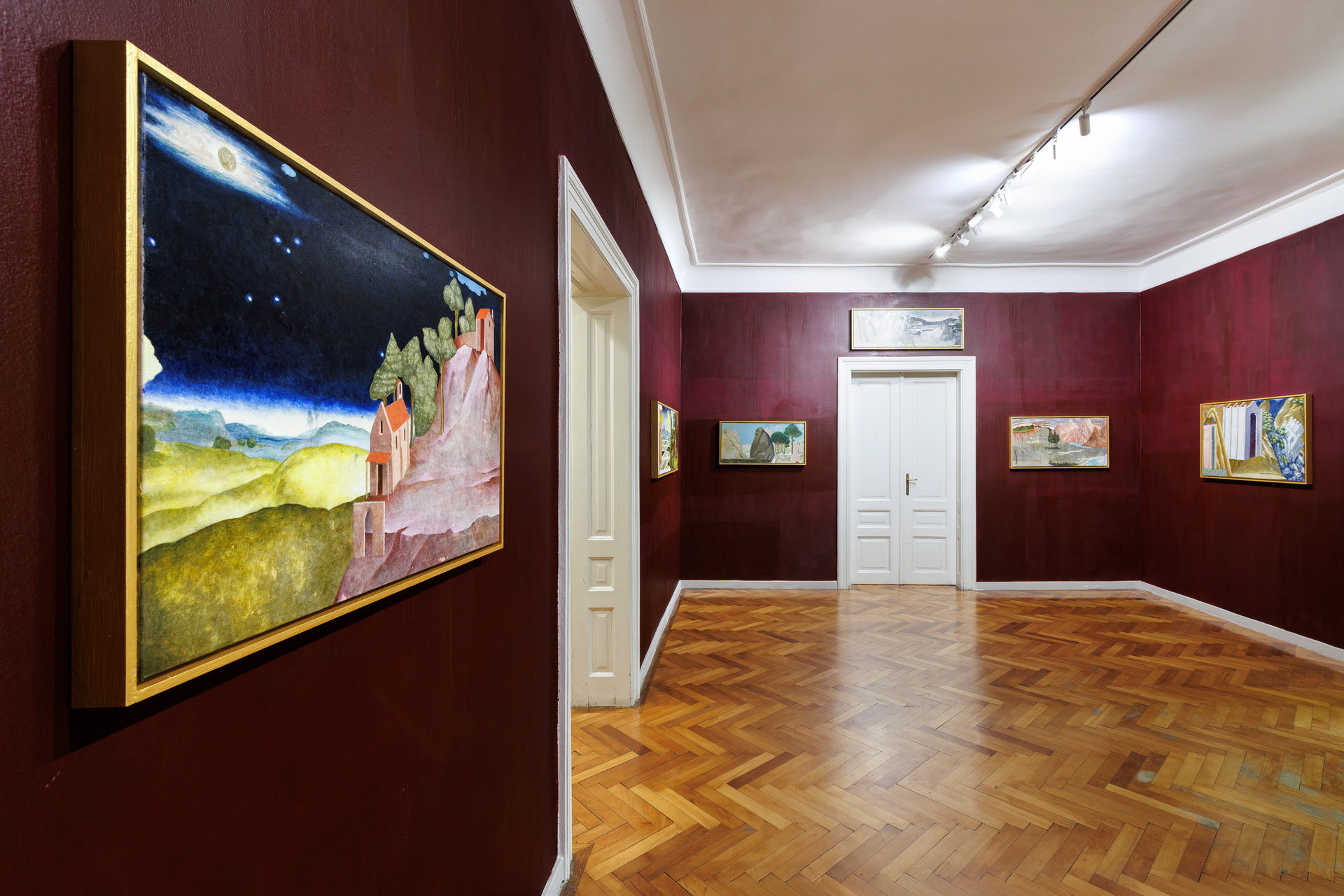
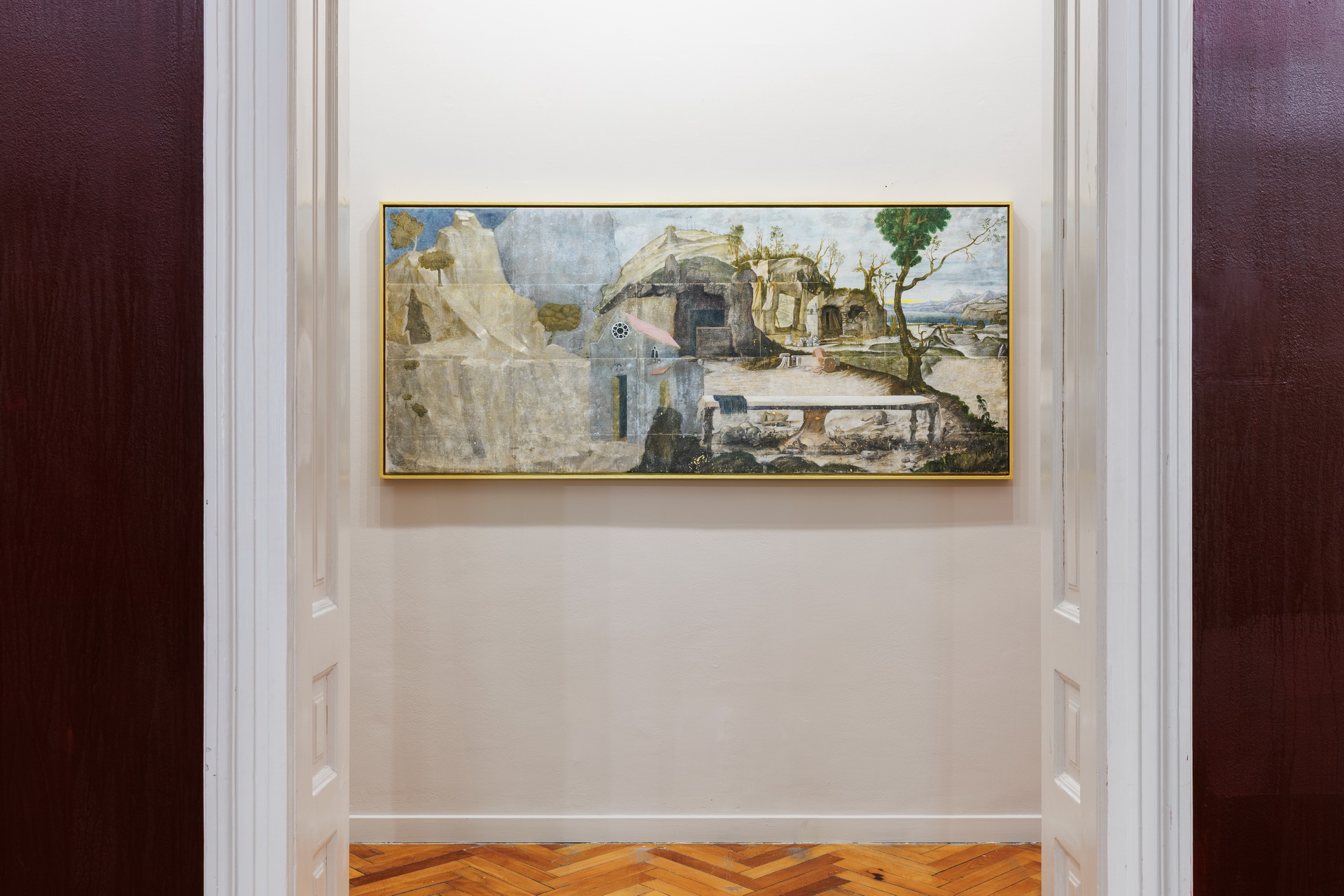
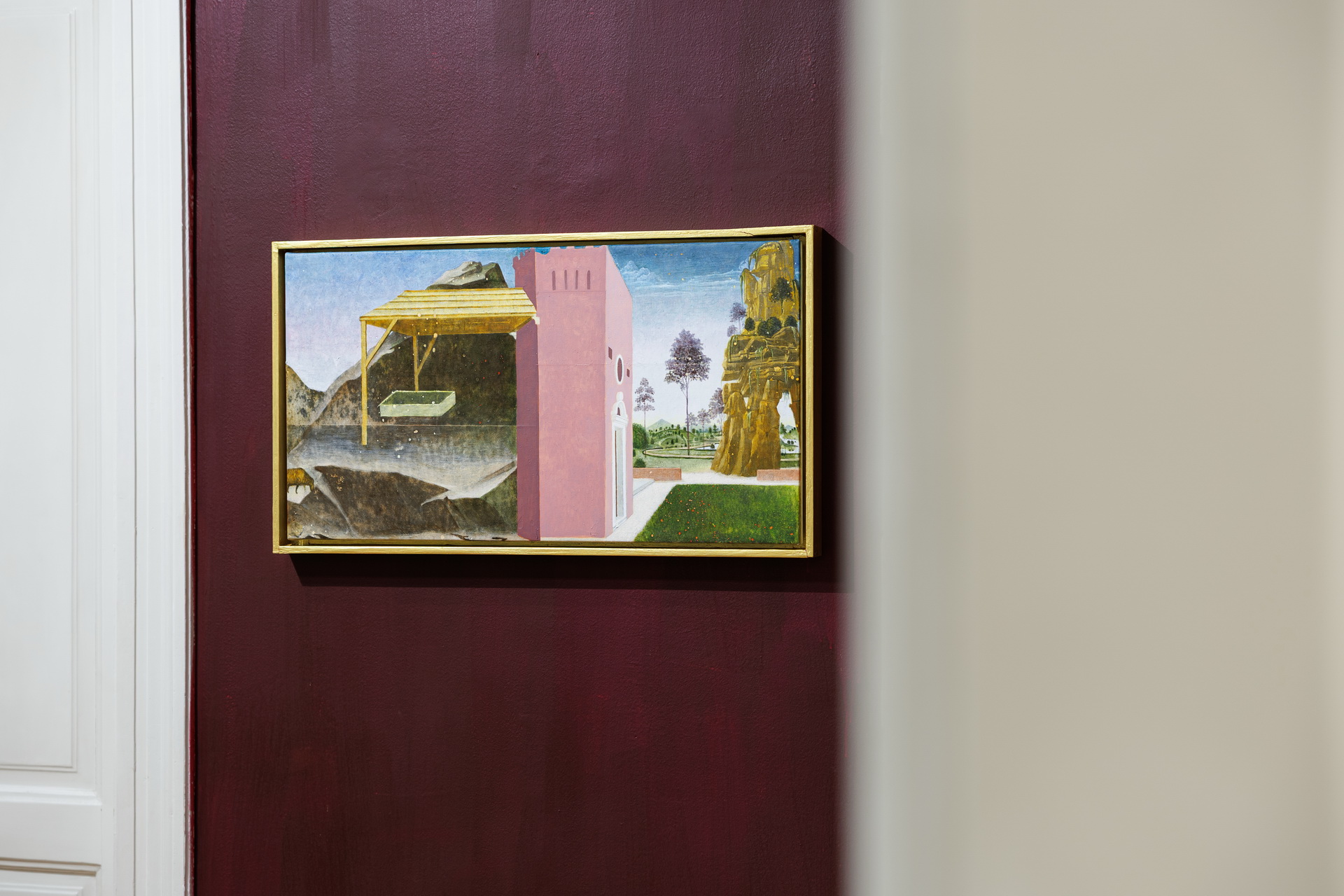
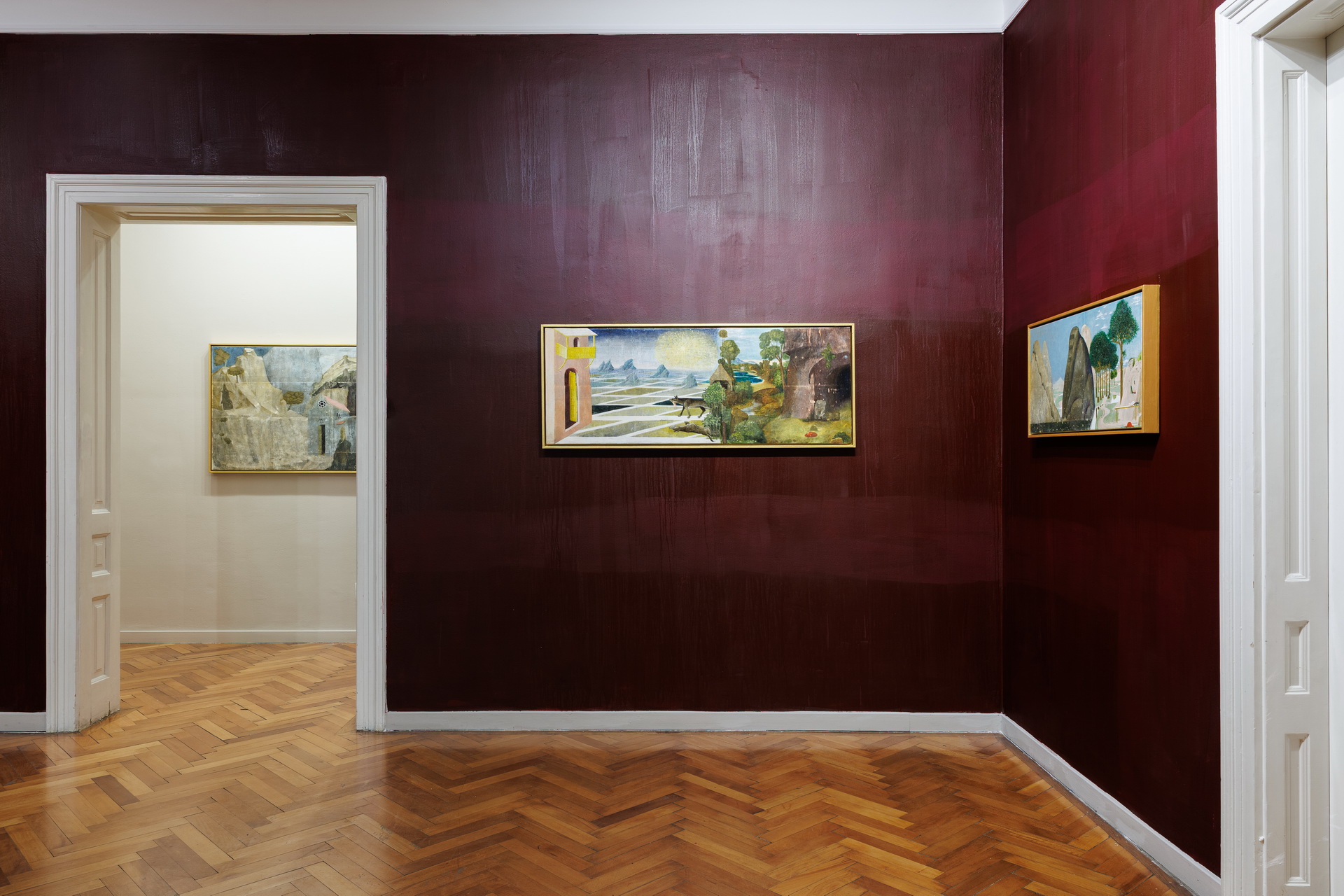
In this series of works by Nikola Marković, the foundation of each image emerges through the merging of fragments from late Gothic and early Renaissance landscapes, which the artist selects, combines, and translates into a new visual whole. From these historical compositions, he removes almost all narrative elements — figures, religious scenes, and concrete events — leaving only the landscape as a space of transition, atmosphere, and visual memory. In doing so, Marković does not reconstruct the historical image, but rather creates a fluid space in which different temporal layers, aesthetic codes, and visual logics dissolve into one another.
Particularly significant is his relationship to the digital image and contemporary technologies of perception. Marković uses transfer as the basis of his process — transferring digitally processed or manipulated visual structures onto canvas — after which he builds layers of color, light, and volume over this “skeleton” of the image. This process resembles the modeling of a surface or the application of makeup to a face: a new physical and tactile materiality of the painting emerges over an existing structure. Embedded in this procedure is the absorption of contemporary tools and modes of seeing, ranging from the internet and digital image manipulation to AI technologies, all of which today shape the way we perceive nature, space, and visual reality itself.
His landscapes are therefore not depictions of nature in the traditional sense, but environments of contemporary perception — images of the world after the digital transformation of vision, spaces in which the organic and the virtual, the historical and the contemporary, the manual and the technologically mediated can no longer be clearly separated. In this sense, landscape in Marković’s work becomes a metaphor for contemporary experience: an environment that we no longer perceive directly, but through layers of visual mediation, technological filters, and collectively produced images of reality.
Ksenija Marinković
ALL RIGHTS RESERVED x vitamin 2023,
design & development - Block&roll
